


What are gravity, vacuum and liquid autoclave cycles?
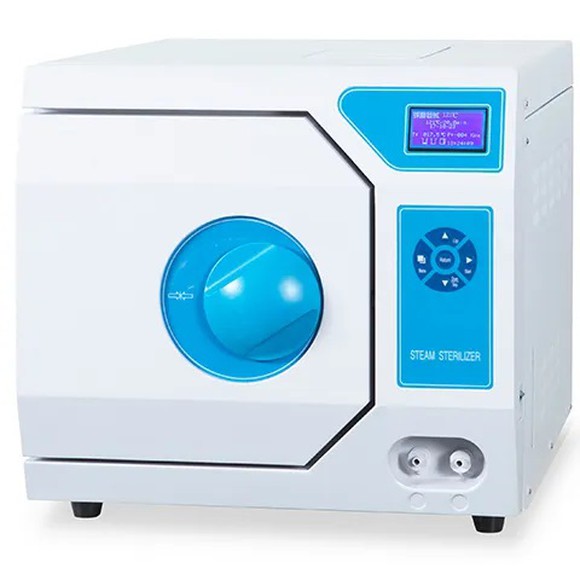
Gravity, vacuum and liquid cycles are the three most common cycles you will encounter when sterilising an autoclave.
Gravity autoclave cycles
Gravity autoclaving, also known as gravity displacement autoclaving, is the most basic form of autoclaving.
The process of gravity autoclaving involves removing all ambient air from the steam steriliser chamber and venting it through the exhaust door. This is done so that the steam can sterilise the objects inside the autoclave.
As the steam is pumped into the autoclave chamber, it rises to the top because its density is lower than the density of the air. This forces the air to reach the bottom of the chamber where it then exits through the exhaust valve. Once the cycle is complete, the steam is released through the drain and the cooling process begins.
Pressure steam sterilisers are commonly used to process laboratory water, media, regulated medical waste, pharmaceuticals and non-porous items whose surfaces can come into direct contact with steam.
Vacuum autoclave cycle
On the other hand, vacuum autoclaving or vacuum pre-autoclaving is preferable when air cannot be easily removed from the sterilising medium. It is often used to sterilise items such as animal cages and bedding or wrapped surgical kits.
Autoclaves designed to perform vacuum cycles have a vacuum system. This system alternates between steam injection and evacuation at the beginning of each cycle. This helps to remove air from the autoclave chamber.
Vacuum extraction helps to completely remove air from the most difficult areas to reach the object. Once all the air is gone, the steam will be able to penetrate the object quickly for a fast and effective sterilisation cycle.
Liquid autoclave cycles
Unlike gravity and vacuum cycles, a liquid cycle does not sterilise liquids. Instead, it sterilises the liquid itself.
Conventional liquid sterilisation techniques usually result in boiling. This happens when liquids that have been sterilised to high temperatures boil over the container being heated. This usually happens if the pressure is released too quickly during the venting phase.
The disadvantage of boiling is that a large amount of liquid is lost due to its violent overflow onto the vessel. It is therefore important to use an autoclave specifically designed for liquid circulation to avoid this loss.
The liquid autoclave cycle avoids boiling by releasing the chamber pressure slowly. For this reason, the cycle is also known as the slow venting method. By releasing the pressure slowly, the temperature of the liquid can be cooled slowly while the pressure is reduced.
The liquid autoclave is capable of sterilising water, brine and agar.
Overview
Typically, you may encounter three types of autoclave cycles: gravity cycles, vacuum cycles and liquid cycles.
In a gravity cycle, steam enters the top and sides of the sterilisation chamber. Since the air is less dense, it can displace the air. Once this happens, the air is removed from the chamber through the discharge holes and the object is thoroughly steam sterilised.
At the same time, steam injection and vacuum extraction are generated during the vacuum cycle to remove air from hard-to-reach areas. Once completed, the sterilisation process can be carried out quickly and efficiently.
Finally, the liquid cycle is used to sterilise the liquid. The preferred method is to sterilise the liquid, as it prevents boiling by slowly releasing the pressure and gradually cooling the liquid.


