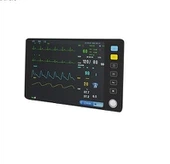
Do you know the parameters and application of the monitor?
Multi-parameter Patient Monitor:ECG. Sp02. NIBP. RESP. TEMP. PR.HR.
The parameters of the monitor refer to ecg, heart rate, respiration, invasive blood pressure, non-invasive blood pressure, cardiac output, temperature, pulse, blood gas and oxygen saturation, which are the ratio of oxygen content to oxygen capacity.
Main Application
Medical monitor is a measure and control patient physiological parameters, and can be compared with the known set value, if there is excessive, can send an alarm device or system.
The monitor must monitor the patient's physiological parameters continuously for 24 hours, detect the trend of change, point out the critical situation, provide the doctor with the basis for emergency treatment and treatment, reduce the complications to the minimum to achieve the purpose of alleviating and eliminating the condition. In addition to measuring and monitoring physiological parameters, the use of the monitor also includes monitoring and treatment of medication and conditions before and after surgery.
Functions of the monitor:
The monitor is different from the monitor diagnostic instrument. It must monitor the patient's physiological parameters continuously for 24 hours, detect the changing trend, point out the critical situation, provide the doctor with the basis for emergency treatment and treatment, reduce the complications to the minimum, and achieve the purpose of alleviating and eliminating the condition.
In addition to measuring and monitoring physiological parameters, the use of the monitor also includes monitoring and treatment of medication and conditions before and after surgery.
Standard 6 parameters of the monitor are ecg, respiration, non-invasive blood pressure, oxygen saturation, pulse and temperature. Additional optional parameters include invasive blood pressure, end-respiratory carbon dioxide, respiratory mechanics, anesthetic gas, cardiac output (invasive and noninvasive), eeg bifocal index, and so on.
Clinical application of the monitor: during and after surgery, trauma nursing, coronary heart disease, critically ill patients, newborns, premature infants, hyperbaric oxygen chamber, delivery room, etc.