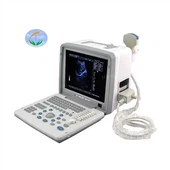
The basic principle of anesthesia ventilator
A ventilator, or ventilator, is a tool for implementing mechanical ventilation to assist and control the patient's breathing, improve the patient's oxygenation and ventilation, reduce the work of respiratory muscles, support circulatory functions, and treat respiratory failure. In the inspiratory phase of the human body's spontaneous breathing, the diaphragm contracts, the thorax expands, and the negative pressure in the chest increases, causing a pressure difference between the airway opening and the alveoli, and gas enters the alveoli. During mechanical breathing, the positive pressure is often used to make the pressure difference to press the anesthetic airflow into the alveoli. When the positive pressure is stopped, the chest and lung tissues elastically retract to produce a pressure difference with the atmospheric pressure to discharge the alveolar air out of the body.
Therefore, the ventilator must have four basic functions, namely, inflating the lungs, converting inhalation to exhalation, expelling alveolar air, and converting exhalation to inhalation, which cycle back and forth in turn. Therefore, it must have: (1) It can provide the power to transport the gas to replace the work of the human respiratory muscles; (2) It can produce a certain respiratory rhythm, including the respiratory frequency and the ratio of inhalation to expiration, to replace the function of the human respiratory central nerve innervating the respiratory rhythm; Appropriate tidal volume (VT) or minute ventilation (MV) to meet the needs of respiratory metabolism; ⑷The gas supplied is best to be heated and humidified to replace the function of the human nasal cavity, and can supply higher than that contained in the atmosphere. The amount of O2 to increase the concentration of inhaled O2 and improve oxygenation.
Power source: Compressed gas can be used as power (pneumatic) or motor as power (electric). Respiration frequency and inspiratory-expiration ratio can also be used pneumatic pneumatic control, electric electric control, pneumatic electric control, etc., to switch between exhalation and inhalation phases, It is often switched to exhalation (constant pressure type) after reaching a predetermined pressure in the breathing loop during inhalation, or to exhalation (constant volume type) after reaching a predetermined volume during inhalation, but modern ventilators have both of the above. Kind of form.
Ventilators used for treatment are often used for patients with more complicated and severe illnesses, requiring more complete functions and capable of performing various breathing modes to meet the needs of changing conditions. The anesthesia ventilator is mainly used for patients undergoing anesthesia surgery. Most patients have no major cardiopulmonary abnormalities. As long as the required ventilator can perform IPPV, it can be used basically as long as it can perform IPPV with variable ventilation, respiratory rate, and breathing rate.
The basic principle of the ventilator: most of the more commonly used systems are operated by the inner and outer double-loop air circuits of the airbag (or folding bellows). The inner ring air circuit and air flow communicate with the patient’s airway, and the outer ring air circuit and air flow are mainly used for squeezing The breathing bag or bellows presses the fresh air in the air bag (or bellows) into the patient's alveoli for gas exchange. It is called driving air. Because it is not connected to the patient's airway, compressed oxygen or compressed air can be used.
Most modern ventilators are:
⑴Pneumatic electric control:
For example, the Ohmeda 7000 ventilator is a typical application of pneumatic and electronically controlled double-loop air circuit. Its electronic control system calculates VT, inspiratory time, expiratory time, and inspiratory flow based on MV, inspiratory-expiratory ratio and respiratory frequency setting values. So as to control the air flow of the required driving air. In the inspiratory phase, the electronic control unit closes the deflation valve, and the driver enters the outer box of the bellows. As the driving gas continues to flow into the outer box, the pressure rises, the bellows is compressed and moves downward, forcing the gas in the box to flow into the anesthesia breathing loop. Enter the patient's lungs. When the total amount of driving air delivered is equal to the approved amount, the inspiratory phase ends, the electronic control unit opens the driving air release valve, the pressure of the driver outside the box drops, and the mixed gas of fresh air and patient exhaled air will continue to enter the box. Use the bellows to rise, when the exhalation ends, the deflation valve closes again, the driver enters the outer box of the bellows, and so on.
⑵Pneumatic air control:
For example, the STAR-100 anesthesia ventilator designed by our hospital adopts upper and lower double folding bellows. The upper bellows leads to the patient’s airway, the lower bellows leads to the outer chamber of the upper bellows, and the upper and lower air chambers are separated by holes through the bellows. Expansion and contraction and opening and closing of the septum valve by magnets on the upper and lower sides of the valve. When the airflow is driven into the upper chamber, the gas in the lower bellows also flows into the upper chamber following the Wenqiuli effect. The pressure in the upper chamber rises, forcing the bellows to move down, so that the fresh gas in the bellows flows to the patient, that is, the inspiratory phase. After reaching the predetermined VT value, The bellows can no longer be compressed downwards. When the pressure in the upper chamber continues to rise, the air outside the upper chamber bellows will be transferred into the lower chamber bellows. The rising item of the bellows opens the partition valve and is attracted by the upper magnet. The upper chamber gas is separated by the middle partition hole. Flow to the lower chamber. The exhaust port is discharged to the atmosphere, the pressure in the upper chamber drops, and the fresh air flows into the upper wind box to prepare for the next inhalation. When the upper wind box is pressed down to a predetermined value, the diaphragm valve is pressed down, and at the same time, the middle partition hole is closed for the lower magnet to attract, and the driving air continues to flow into the upper chamber, resulting in the Wen Qiuli effect that makes the lower wind box. The gas flows into the upper chamber again, and the lower wind box moves down, which no longer affects the closing of the septum valve until the inspiratory phase starts again, the pressure in the upper chamber is high until the airflow flows into the lower wind box in the opposite direction, and the lower wind box rises to open the middle partition hole. The work is repeated in this way, and the driving air flow rate and the size of the lower chamber exhaust opening can be adjusted in frequency and inhalation-expiration ratio, thus basically satisfying the four functions of the ventilator.
⑶ Electric control:
For example, the domestic SC-3 type ventilator uses two sets of four-link structures to change the rotational movement into a swing, thereby driving the storage airbag to reciprocate up and down to produce controlled breathing. After the motor decelerates, it drives the disc M, and then transmits the motion to the pendulum block N through the connecting rod, causing it to swing. The pendulum rod K is moved up and down through the connecting rod L. During the expiration phase, the swing rod moves upwards to increase the capacity of the air box and inflate. When inhaling, K moves downward, forcing the air in the bellows to flow into the patient's lungs. M speed can change frequency, adjust the connection point of L and K, can change VT. O2 is input from the inlet H, and stored in the air bag C via the one-way valve. When exhaling, the bellows expands, and O2 from C enters the bellows. When inhaling, the one-way valve E is closed, and the gas O2 in the bellows enters the patient's lungs. When the airway pressure is >60cmH2O, the pressure-limiting valve G opens to release gas and reduce the airway pressure. PEEP is connected to the fish mouth breathing valve F, and the patient's exhaled air is discharged through the PEEP valve.
⑷High-frequency jet ventilator:
The principle is to directly input the high-flow gas of the high-pressure gas source into the patient's airway intermittently, and the basic principle of high-frequency jet ventilation is to use a rotary valve, a pneumatic valve or a solenoid valve to control the jet flow. The entire breathing circuit is connected to the atmosphere, and its exhaled breath is directly discharged to the atmosphere. Its flow, pressure and frequency are adjustable, which is suitable for some special cases, conditions and operations.